
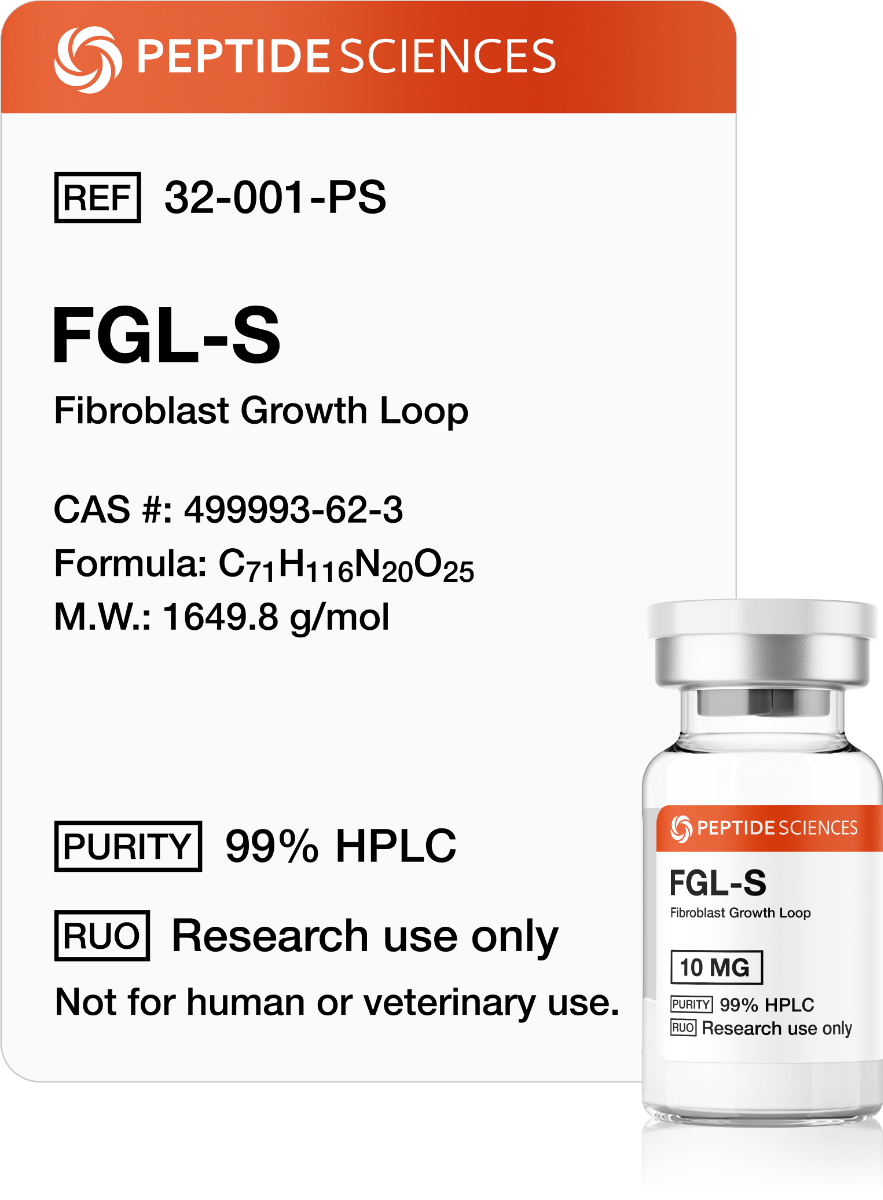
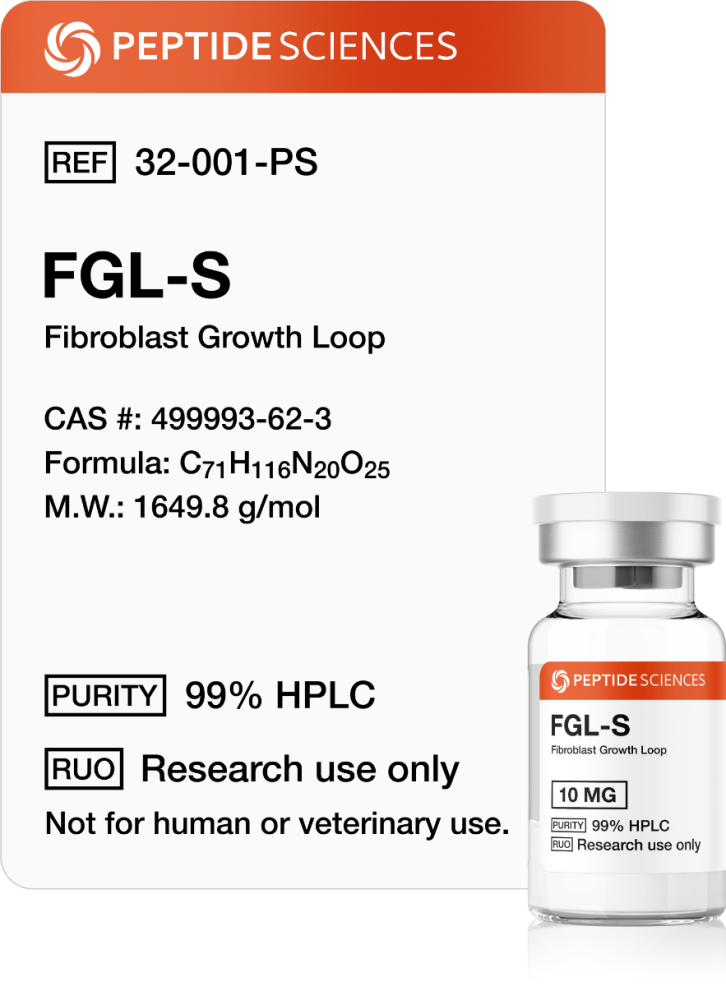

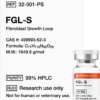
FGL-S 10mg
$95.00
FGL-S: Overview
Fibroblast growth loop (FGL) is a 15-amino acid synthetic peptide derived from the neural cell adhesion molecule (NCAM). Research indicates that it possesses neurotrophic and memory-enhancing properties, promoting neurite outgrowth, neuron survival, and synaptic growth/plasticity. In animal models, FGL has shown neuroprotective effects including reduced neuron death following stroke, reductions in neuron death in neurodegenerative diseases, and reduced inflammation (via attenuated microglial activation) in the brain and central nervous system. In animal studies, FGL has been found to enhance social memory retention, improve sensorimotor development, and improve cognitive function. FGL comes in several forms including FGL-1, FGL-2 and FGL-S. FGL-S is most similar to FGL-1 in terms of effects, but is a shorter amino acid and as such is easier and more cost effective to produce.
FGL-S: Structure

Source: PubChem
Amino Acid Sequence: H-Glu-Val-Tyr-Val-Val-Ala-Glu-Asn-Gln-Gln-Gly-Lys-Ser-Lys-Ala-OH
Chemical Formula: C71H116N20O25
Molecular Weight: 1649.8 g/mol
PubChem CID: 16200289
CAS No: 499993-62-3
Synonyms: HY-P3281, DA-53184, CS-0655069
FGL-S: Research
FGL-S: What is FGL?
FGL, short for fibroblast growth loop, is a mimetic of a section of the second fibronectin type III module of neural cell adhesion molecule (NCAM). That mouthful of a sentence doesn’t do much to clarify what FGL is, however, so let’s break it down.
NCAM, also called CD56, is a binding protein found on the surface of neurons, glia, and skeletal muscle cells. NCAM signals neuron growth via the fibroblast growth factor receptor and regulates interactions between neurons and between neurons and muscle cells. It is thought that NCAM is important for cell-to-cell adhesion and that it influences the connections of neurons with one another and with muscle cells at the neuromuscular junction.

Image showing the location of FGL within the larger second fibronectin type II module of NCAM. The FGL sequence, delineated in yellow, possesses the ability of its parent molecule to stimulate the fibroblast growth factor receptor on neurons and a handful of other cells in the central nervous system.
Source: Wiley Online Library
Research indicates that NCAM is important in neuron growth and synaptic plasticity. This, of course, means the NCAM is important in learning and memory. Studies in animals have shown that NCAM plays an integral role in regeneration of damaged neural tissue[1]. Mice lacking all forms of NCAM show problems with cognitive functions, especially in spatial learning and memory. They also have difficulties with fear-related learning and show impaired long-term potentiation (LTP), a key process for memory formation. Additionally, these mice display depression-like behavior and reduced formation of new neurons in the hippocampus, along with lower levels of activated CREB, a protein important for brain function[2].
As noted above, NCAM works via interaction with fibroblast growth factor receptor (FGFR1 in this case). FGL mimics the binding of NCAM to FGR1, stimulating neurons to increase in length. In short, FGL activates NCAM and thus stimulates the beneficial effects of the fibroblast growth factor receptor on neuron/synaptic growth. Research in animal models indicates that FGL increases the ration of mushroom to thin spines on neurons and that it also increases the number of multivesicular bodies and coated pits. In other words, FGL promotes the growth of dendritic segments and thus improves the interconnection between neurons.

Image showing the increased length of neurons and increased density and robustness of dendrites on neurons treated with FGL.
Source: Wiley Online Library
FGL-S Research Administration
FGL is a large peptide and thus one would expect that its administration would be limited to IV use with perhaps an argument for subcutaneous use. Research in rats, however, indicates that FGL uptake is not only potent following subcutaneous administration, but that it is equally potent following intranasal administration. In both cases, uptake is rapid with FGL detected in the blood just 10 minutes after administration. Additionally, FGL could be detected in blood and cerebrospinal fluid for up to 5 hours following administration[3]. Clearly FGL crosses the blood-brain barrier easily and rapidly, indicating that administration in experimental settings should be relatively straightforward.
It is worth noting that while FGL can be administered as a monomer, multimeric forms of the peptide have higher potency for receptor activation. Dimeric (FGL-2) and tetrameric (FGL-4) forms are most commonly used in research settings due to their high potency. These peptides are, however, exceptionally difficult to manufacture and can thus be prohibitively expensive. FGL-S offers an affordable alternative that preserves most of the potency and benefits of FGL-1 and FGL-2.
Intranasal doses of FGL are well tolerated, with no significant changes seen in ECGs, vital signs, or lab tests. A total of three participants (13%) reported five mild side effects.
FGL-S and Cognitive Function
Research in newborn rats shows that FGL can accelerate early development of coordination skills while research in older rats shows increased retention of social memory. Recall that FGL can stimulate function of the fibroblast growth factor receptor on cells within the central nervous system. This activation leads to changes in a number of intracellular signal transduction pathways such as the Ras-mitogen activated protein kinase and the phosphatidulinositol-3-kinase (PI3K)-Akt pathways. In the research on rats, neuron growth in three different sets of neurons was observed, each showing slightly difference responses due to differing expression of fibroblast growth factor receptor subtypes/isotypes. Although the FGL peptide generally stimulates neurite outgrowth in the neuronal cell types studied, the strength and pattern of the response varies between them.
Dopaminergic neurons
In dopaminergic neuron cultures, these specific neurons make up only a small portion of the cells taken from the midbrain of 15-day-old rat fetuses. These cultures also tend to be much denser than those of cerebellar granule neurons (CGNs) and hippocampal neurons. As a result, they already show a high baseline level of neurite outgrowth, so the additional effect of FGL is relatively small—about a 20% increase compared to unstimulated controls. Still, a 20% increase in neurite outgrowth is nothing to scoff at and, more importantly, that 20% can be very meaningful in the setting of toxicity.
Dopaminergic neurons, as it turns out, are highly sensitive to oxidative stress, likely a result of their high energy requirements. These are the neurons primarily affected in Parkinson’s disease and in response to poisoning with certain neurotoxins. Research in rats indicates that FGL can rescue dopaminergic neurons from death. In these studies, FGL rescued approximately 135% of neurons in rat models of Parkinson’s disease. This indicates that FGL not only prevented the loss of these neurons, but actually increased their growth and differentiation over and above baseline.
In rat models of Parkinson’s disease, FGL treatment has been shown to protect against mitochondrial toxicity, which is the final common pathway in the death of neurons in the substantia nigra. Analysis of cells treated with FGL shows increased levels of NCAM activity that directly translated into increase synapse formation in the substantia nigra. This, in turn, correlates with clinically meaningful improvements in locomotion of PD mice[5]. This cutting-edge research may very well be opening up the pathway toward stopping PD in its tracks.
Hippocampal Neurons
In contrast to dopamine neuron cultures, hippocampal neurons from newborn rats showed a maximum neurite outgrowth of about 140% with FGL treatment compared to control cultures. Hippocampal neurons are responsible for memory and emotional responses. They are among the most sensitive to the ravages of Alzheimer’s disease. As with dopaminergic neurons mentioned above, research indicates that FGL can rescue 110% of hippocampal neurons exposed to amyloid beta toxins associated with Alzheimer’s disease.
Treatment with FGF1 and FGL in an Alzheimer’s disease (AD) mouse model improved spatial memory, boosted the growth of new neurons, reduced harmful inflammation in the brain, and limited nerve damage. However, only FGF1 reduced the buildup of senile plaques. In lab studies with microglial cells, FGF1 also increased their ability to clear plaques through improved phagocytosis. These results suggest that activating FGFR1 can reduce brain damage and improve memory in AD by supporting immune function and overall brain health.
Aβ actually causes harmful changes in several brain cell types in Alzheimer’s disease, including inflammation and nerve cell damage. In later stages of the disease, reactive astrocytes—cells involved in brain inflammation—tend to increase. AD mice, for instance, have significantly more reactive astrogliosis than healthy (WT) mice. However, AD mice treated with FGL had much less astrocyte activation than even untreated AD mice.
To understand how FGL affects immune response, researchers looked at how microglia—brain immune cells—interact with plaques. FGL-treated AD mice had more microglia around the plaques, suggesting improved plaque response. Better memory performance in mice is often linked to increased growth of new neurons in the hippocampus. To measure this, brain tissue was stained for DCX, a marker of new neurons. AD mice had fewer new neurons than healthy mice, but FGL treatment significantly increased neurogenesis in both AD and WT mice. Finally, nerve damage near plaques was evaluated using LAMP1, a marker for damaged neurites. FGL-treated AD mice showed less nerve damage around the plaques than untreated AD mice. In short, FGL treatment reduces inflammation, boosts new neuron growth, improves immune response to plaques, and limits nerve damage in Alzheimer’s model mice[6], [7].
Cerebellar Granule Neurons
Cerebellar granule neurons (CGN) from 7-day-old rats responded the most strongly, with neurite outgrowth more than doubling (over 200%) compared to untreated controls. However, CGNs required a much higher concentration of FGL to achieve this effect, indicating they are less sensitive to the peptide than the other neuron types. CGNs are rescued by FGL at varying levels depending on the nature of the insult. Research in mice shows FGL rescue rates ranging from 40% to as high as 135%[8].
FGL-S and Neurodegenerative Disease
In neurodegenerative disease, there is a progressive loss of synaptic connection, neurons, or both. Neurodegenerative diseases included conditions like Alzheimer’s disease and Parkinson’s disease, but also include conditions like prion disease, multiple sclerosis, amyotrophic lateral sclerosis, and Huntington’s disease. Each of these conditions has its own pathophysiology, but all neurodegenerative diseases are characterized by oxidative stress and inflammation in the central nervous system. Each of these conditions is also characterized by atypical protein assembly and though the type of protein assembly differs between each of these conditions, they also share a number of characteristic protein changes in common. The hope is that the similarities shared between these conditions means that a single treatment might be found to ameliorate most if not all neurodegenerative conditions.
FGL is a prime candidate for counteracting the effects of neurodegenerative disease at the level of a shared common pathway. Research in rats indicates that FGL can reduce the accumulation of atypical proteins in the setting of Alzheimer’s disease. In fact, research in rats has shown that FGL can fully restore the brains of rats with amyloid plaques (the characteristic atypical protein in Alzheimer’s disease) to baseline. This reduction in amyloid plaque burden is associated in these experiments with increase neuron survival and reduced cognitive effects typical of Alzheimer’s disease.
FGL appears to achieve its remarkable results in the setting of Alzheimer’s disease by interfering with the cytosolic kinase GSK3beta. This kinase is thought to be pathologically upregulated in Alzheimer’s disease, causing increased neuron death and retraction of neurites. Recall that FGL has already been noted to cause neurite extension[9].
FGL-S and Traumatic Brian Injury
Traumatic brain injury (TBI) causes a large number of deaths and disabilities worldwide each year, yet there is still no effective treatment. On a cellular level, TBI leads to tissue death at the injury site and disrupts the blood–brain barrier, triggering inflammation. This inflammation causes oxidative stress, nerve cell damage, and cell death in the surrounding brain tissue. In response, the body activates protective mechanisms, such as producing growth factors and antioxidants. To reduce the impact of TBI, it is important to find treatments that can limit nerve cell damage and death, while also encouraging the production of repair-promoting factors to support brain tissue regeneration.
FGL, as noted, can reduce neuron death caused by oxidative stress in models of ischemia. It has also shown potential in Alzheimer’s and Parkinson’s disease models by reducing neuron damage and death secondary to atypical protein toxicity and mitochondrial dysfunction. In one study, researchers examined how FGL affects gene expression in both healthy animals and those with traumatic brain injury (TBI). They found that 6,965 genes were affected by the injury, and 321 genes were specifically influenced by the combination of FGL treatment and injury. This suggests that FGL may play an important role in central nervous system regeneration following injury. Genes affected by the combination of FGL treatment and TBI involved a wide range of functions. Notably, one gene cluster became upregulated at day four in FGL-treated animals. This included FAIM (a gene that may help prevent cell death and support neuron growth), as well as Rgs14 and Slc7a1, which are involved in cell signaling and transport linked to regeneration. An immune-related gene, RT1-Ba, was also activated later in the response.
Another cluster of genes, including carbonic anhydrase-related protein IX, aldolase C, and cystathionine synthase, showed an unusual pattern: increased expression at 6 hours and day 4, but reduced expression at day 1. This may reflect a temporary suppression of repair mechanisms during the peak of inflammation. Overall, the findings suggest that FGL helps shift the gene expression profile toward neuroprotection and regeneration after brain injury, supporting its potential as a therapeutic agent in TBI[10].
FGL-S and Depression
For decades now the cause of depression has been attributed to changes in levels of chemicals within the brain. Most people of heard the familiar refrain of a “chemical imbalance” causing depression and mood disorders. Unfortunately, there has never been a great deal of evidence to support this hypothesis and drugs designed to treat these “chemical imbalances,” drugs like SSRIs and MAOIs, have been hopelessly ineffective. These shortcomings in evidence and results have led scientists to speculate that the chemical imbalances may not be directly or even indirectly responsible for depression but that mood disorders may, in fact, be the result of impaired brain plasticity and tissue remodeling in the central nervous system and that alterations in hippocampal neurogenesis may be the direct cause of mood disorders. This hypothesis is support, at least to a small degree, by the fact that the handful of anti-depressive medications that have shown minimal benefit in treating depression can counteract the loss of neuron plasticity to a limited degree.
If the theory holds true that loss of hippocampal plasticity is the causative factor in depression, then restoration of that plasticity should ameliorate the condition. Studies in rat models of depression show that NCAM deficiency is a common problem in the setting of depression and that restoration of NCAM activity can help to thwart the effects of depression. Depressed rats given FGL shown changes in both depressive behavior and neurogenesis, suggesting that the two processes are indeed linked[2], [11]. This research has barely scratched the surface of FGL in depression, however, leaving a great deal of room for additional work in the future. .
FGL-S and Cognitive Enhancement
It should come as no surprise, given the discussion above, that FGL has been put forth a potential nootropic and cognitive enhancer. Afterall, in vivo, FGL has been shown to act as a memory enhancer and to protect the nervous system against global ischemia. It has also been shown to reduce neuropathology and the cognitive impairment associated with diseases like Alzheimer’s and Parkinson’s. In rat models of cognitive impairment not associated with neurodegenerative disease, FGL has been shown to protect neurons from damage and increase neuron growth. And, while these studies looked at the benefits of FGL against potential impairment, there were interesting findings when comparing FGL against the control groups. Namely, FGL not only showed benefit when administered to rats at risk of neuronal decay, it showed benefit against the control groups as well. The studies were too small to reach statistical significance for these findings, but the implication is clear. FGL is not only able to protect the brain and central nervous system against insult, it potentially has the ability to enhance cognition over baseline[12].
FGL-S Summary
FGL is a relatively new synthetic peptide that appears to have benefits in protecting neurons in the central nervous system against injury and disease settings. It also appears to have potential nootropic benefits, though this aspect of the peptide has been less well explored in animal models. FGL, which can be administered intranasally, readily crosses the blood brain barrier where it affects neurons and their supporting cells. Research shows that FGL can increase neurite outgrowth, particularly in the substantia nigra, hippocampus, and cerebellum. This results in both improved interconnection of neurons as well as increases in neuron growth and health. This has been shown to increase both motor function and memory and spatial reasoning in a number of settings. The peptide is of interest in the setting of neurodegenerative disease and in the treatment of traumatic brain injury. It is of particular interest in the treatment of Parkinson’s disease, with research indicating that it can prevent the death of neurons in the substantia nigra and significantly reduce movement disorder in mouse models of Parkinson’s disease.
About The Author
The above literature was researched, edited, and organized by Dr. Logan, M.D. Dr. Logan holds a doctorate degree from Case Western Reserve University School of Medicine and a B.S. in molecular biology.
Scientific Journal Author
Victor I. Popov, Ph.D. is a senior researcher at the Institute of Cell Biophysics, Russian Academy of Sciences, Pushchino, Russia. He has contributed extensively to the study of synaptic transmission, presynaptic mechanisms, and calcium signaling in neurons. His research focuses on understanding the dynamics of synaptic vesicles, neurotransmitter release, and mechanisms of short-term synaptic plasticity. Dr. Popov has published numerous articles in leading neuroscience and biophysics journals, often collaborating with international researchers in cellular physiology and neurobiology. His work is recognized for advancing the understanding of how presynaptic terminals regulate neural communication.
Dr. Popovis referenced as one of the leading scientists involved in the research and development of FGL-S. In no way is this doctor/scientist endorsing or advocating the purchase, sale, or use of this product for any reason. There is no affiliation or relationship, implied or otherwise, between Peptide Sciences and this doctor. The purpose of citing the doctor is to acknowledge, recognize, and credit the exhaustive research and development efforts conducted by the scientists studying this peptide. Dr. Popov is listed in [1] under the referenced citations.
Referenced Citations
ALL ARTICLES AND PRODUCT INFORMATION PROVIDED ON THIS WEBSITE ARE FOR INFORMATIONAL AND EDUCATIONAL PURPOSES ONLY.
The products offered on this website are furnished for in-vitro studies only. In-vitro studies (Latin: in glass) are performed outside of the body. These products are not medicines or drugs and have not been approved by the FDA to prevent, treat or cure any medical condition, ailment or disease. Bodily introduction of any kind into humans or animals is strictly forbidden by law.
by Lily Richardson (verified owner)
“The peptides are consistent every time I order. That’s why I stick with Peptide Sciences.”
by Hazel Garcia (verified owner)
“Still number 1 for me.”
by Aubrey Hall (verified owner)
“Peptide Sciences continues to deliver quality.”
by Harper Walker (verified owner)
“I like that they stick with USA made peptides. Not many brands do that anymore. Still number 1 for me.”
by Nolan Jenkins (verified owner)
“No delays or issues with shipping.”
by Aria Hill (verified owner)
“Placed another order and once again got fast delivery and clean USA made peptides. Still number 1.”